

Turn-Taker Trish helps children learn to share, trade fairly, wait patiently, and take turns while playing and working with others. Through storytelling, movement, positive self-talk, and practice, children develop tools they can use at school, at home, and with others.
Positive Self-Talk
“I take turns.”
How to Use This Lesson
1. Meet Turn-Taker Trish
Introduce Turn-Taker Trish, a real Powerful You kid who is learning to share and take turns. Look at Trish's face and ask, “How do you think Trish is feeling?” Talk about how waiting for a turn can sometimes be hard, especially when we're excited to play!
2. Breathe & Stretch
Choose a simple stretch from the Breathe and Stretch on the Beach book or follow Trish's FREE movement video. Practice taking a slow breath when waiting for something you really want.
3. Read the Powerful You Story
Read Turn-Taker Trish's story from the Powerful You Primary book or laminated cards. Talk about Trish's feelings and experiences. Ask, “How does it feel when someone lets you have a turn?”
4. Practice Positive Self-Talk
Say Trish's phrase together: “I take turns.” Practice saying it aloud, then quietly in your mind. Encourage children to remember these words when sharing toys, playing games, or waiting in line.
5. Write or Draw
Choose a writing or drawing activity from the Powerful You Primary book. Invite children to draw themselves sharing a favorite toy, taking turns on the playground, or inviting someone to play.
6. Role-Play
Let children hold Trish's laminated card and pretend to be Turn-Taker Trish! Act out situations such as two friends wanting the same ball, waiting for a turn on the swings, or inviting someone into a game. Practice saying, “We can share!” “Do you want to join in?
7. Display the Skill Sign
Display Turn-Taker Trish's Sharing Words sign where children can see it. Compare the two speech bubbles. Read examples such as “This is mine!” and “I go first!” Then practice friendly alternatives: “We can share,” “Do you want to trade?” “Do you want to join in?” and “Can I play with the ball after you?” Ask children, “Which words help us make and keep friends?”
8. Collect & Celebrate with Digital Brag Tags
Notice children sharing materials, waiting patiently, inviting others to play, and using friendly words. Celebrate their efforts with Digital Brag Tags and say, “You used your Powerful You thinking!”
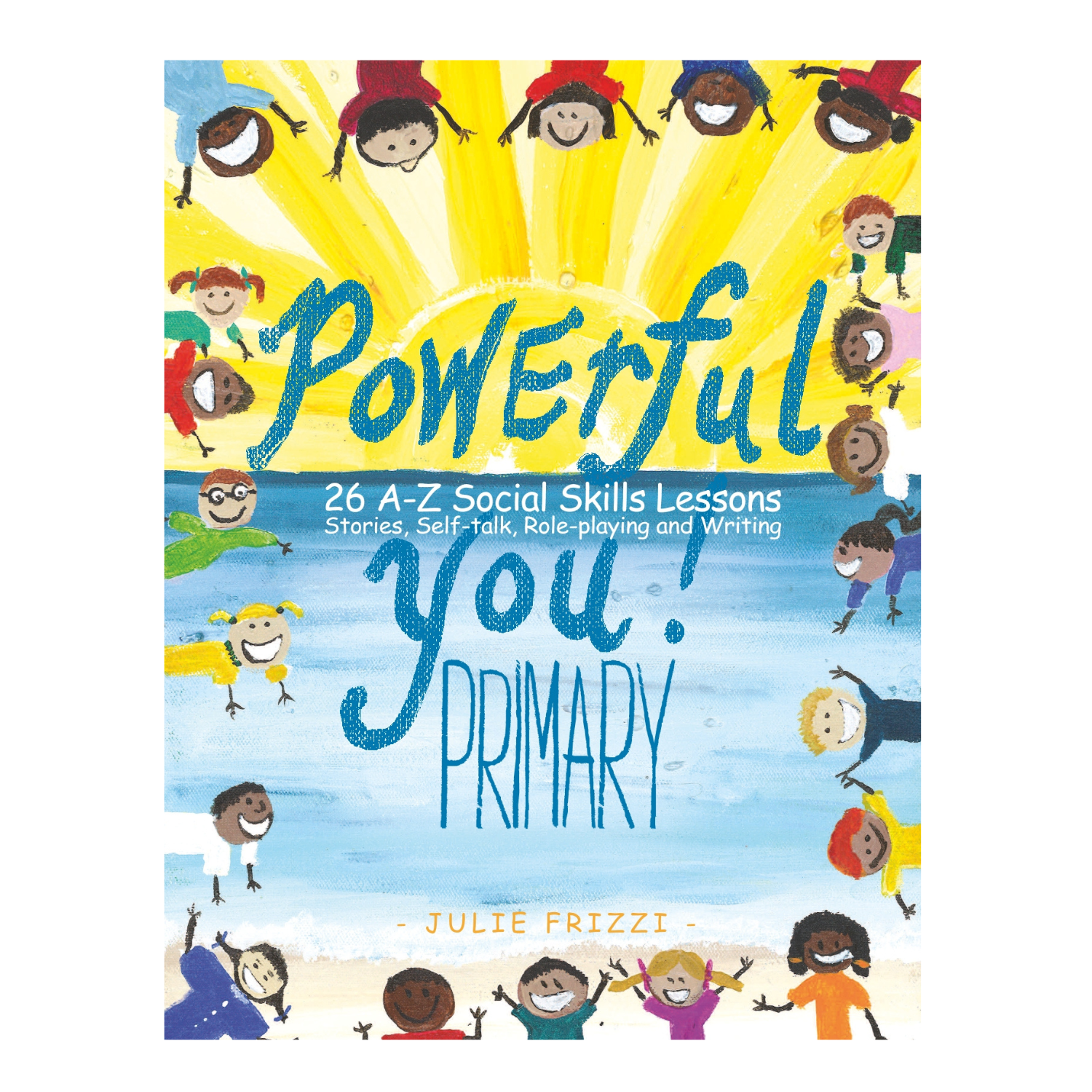
Powerful You Primary (Kindergarten–Grade 1) is a colorful, hand-illustrated social-emotional learning resource designed to help young children find guidance, encouragement, and support for challenges they may experience at school or at home. Created from more than 30 years of educational experience, this engaging tool brings comfort, confidence, and joy to early learners.
Available as a book or laminated role-play card set, Powerful You Primary gives educators, counselors, and families flexible ways to teach essential life skills in fun and meaningful ways. Each lesson uses storytelling to capture attention and strengthen learning through role-playing, movement, thinking maps, games, and positive self-talk.
Children meet the 26 A–Z Powerful You Kids, memorable characters who model positive behaviors and healthy choices. For example, G – Goodsport Grady teaches teamwork and pitching in. Other lessons focus on honesty, independence, self-esteem, responsibility, taking turns, waiting to speak, ignoring distractions, and more.
Lessons align with ASCA National Standards developed by American School Counselor Association, making this a valuable resource for classroom guidance, school counseling lessons, small groups, and home support. Powerful You Primary helps transform classrooms and home environments by teaching social skills proactively and addressing concerns such as bullying at the core.
Companion Classroom Social Skill Signs that match every A–Z lesson are also available separately to reinforce learning visually throughout the day.
Created by an educator who has supported children for over 30 years, Powerful You Primary helps children build skills in:
Problem-solving
Teamwork
Listening
Self-confidence
Friendship skills
Emotional awareness
Respect
Responsibility