
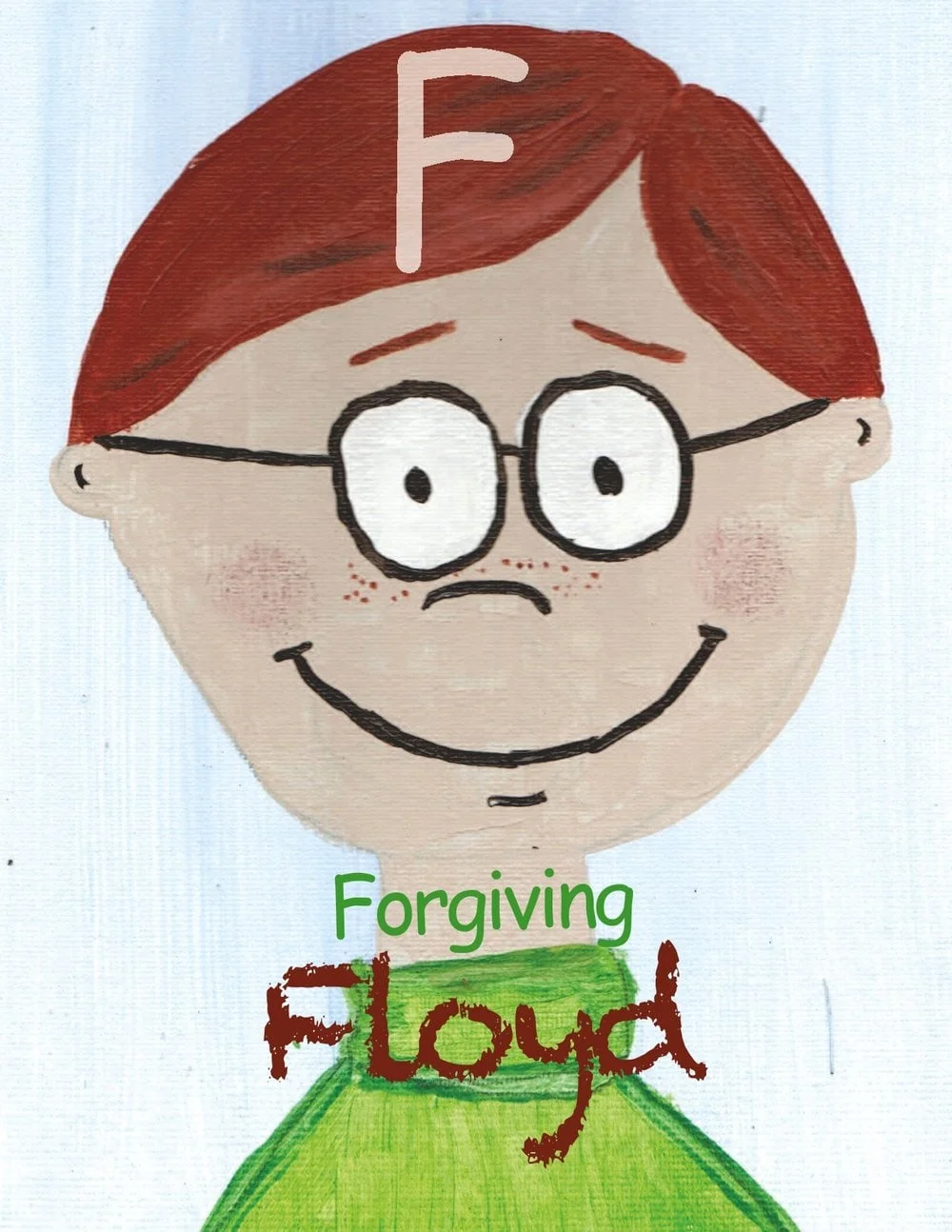
Forgiving Floyd helps children learn how to apologize sincerely, take responsibility for mistakes, and practice forgiveness while respecting their feelings. Through storytelling, movement, positive self-talk, and practice, children develop tools they can use at school, at home, and with others.
Positive Self-Talk
“I am forgiving.”
How to Use This Lesson
1. Meet Forgiving Floyd
Introduce Forgiving Floyd, a real Powerful You kid who is learning how to apologize and forgive. Ask children, “Have you ever hurt someone's feelings by accident or made a choice you wished you could change?” Talk about how everyone makes mistakes, and we can learn to make things better.
2. Breathe & Stretch
Choose a simple stretch from the Breathe and Stretch on the Beach book or follow Floyd's FREE movement video. Practice taking a slow breath when feeling upset, embarrassed, or sorry about something.
3. Read the Powerful You Story
Read Forgiving Floyd's story from the Powerful You Primary book or laminated cards. Talk about Floyd's feelings and experiences. Ask, “How does it feel when someone says they're sorry?”
4. Practice Positive Self-Talk
Say Floyd's phrase together: “I am forgiving.” Practice saying it aloud, then quietly in your mind. Talk about how forgiving means working toward letting go of hurt feelings, and how a sincere apology can help repair a friendship.
5. Write or Draw
Choose a writing or drawing activity from the Powerful You Primary book. Invite children to draw two friends making up after a disagreement or write a simple sentence about saying sorry.
6. Role-Play
Let children hold Floyd's laminated card and pretend to be Forgiving Floyd! Act out a situation where someone takes a toy without asking or accidentally hurts a friend's feelings. Practice saying, “I'm sorry for taking your toy. Next time, I will ask first.” Let children take turns practicing an apology and responding kindly.
7. Display the Skill Sign
Display Forgiving Floyd's Steps in Apologizing sign where children can see it. Practice his five steps together: Thinkabout what happened, Understand why you did it, Walk in Their Shoes to imagine how the other person feels, Planwhat to do differently, and Say a sincere apology. Use Floyd's sentence starter: “I'm sorry for ____. Next time, I will ____.”
8. Collect & Celebrate with Digital Brag Tags
Notice children taking responsibility for mistakes, offering sincere apologies, and showing forgiveness. Celebrate their efforts with Digital Brag Tags and say, “You used your Powerful You thinking!”