

Help teens recognize that they have control over their thoughts with this actionable lesson from the Self-Built Teens Workbook. Whether it's conquering anxiety, fostering mindfulness, or building emotional resilience, Lesson X sets the stage for meaningful growth.
Positive Self-Talk
“I eXchange unhealthy thoughts.”
How to Use Lesson X
1. Meet the Powerful You Teen
Introduce eXchanging Xavier and the lesson theme, eXchange Unhealthy Thoughts.
Discuss how everyone experiences negative thoughts, especially after making a mistake, feeling disappointed, or comparing themselves with others.
Explain that our thoughts are not always facts. We can learn to notice unhelpful thoughts and replace them with more encouraging, realistic ones.
2. Practice Positive Self-Talk
Introduce Xavier's phrase: “I eXchange unhealthy thoughts.”
Invite teens to repeat it silently while taking a slow breath.
Discuss how thoughts such as “I'm not good enough” or “Others are better than me” can influence how we feel and act.
Practice exchanging these statements for:
I am worthy.
I am good enough.
I am loved.
Encourage teens to choose a positive statement that feels meaningful and believable to them.
3. Breathe & Stretch
Use the free 5-minute classroom chair-stretch video below or practice Eagle Stretch from the Self-Built Teens book.
Stand with your feet together and arms extended in front of you.
Cross your right foot over your left, using the toes as a kickstand for balance if needed.
Cross your right arm under your left and bring your hands together. Alternatively, cross your arms and place your hands on opposite shoulders.
Bend your knees slightly, sit your hips back, and lift your elbows.
Take five slow breaths while imagining an unhealthy thought being exchanged for a supportive one.
Release and switch sides.
4. Read the Story & Reflect
Read Xavier's story from the Self-Built Teens book.
Discuss how Xavier missed an important soccer goal and began thinking that he wasn't smart, strong, or good enough.
Explore how he became the watcher of his thoughts, observing them instead of automatically believing them.
Use the book's reflection and journaling prompts:
Make a list of positive “I am” statements.
What worries are you carrying? Write them down and place them in a box.
What is the best compliment you've ever received?
What are some ways you can make your life more positive?
Remind teens that noticing a thought gives them an opportunity to decide what to do with it.
5. Connect with a Breaker Activity
If time permits, explore the Unhealthy Thinking examples from the book.
Introduce five common thinking patterns:
Blaming: Refusing responsibility and placing all the fault on someone else.
Mind Reading: Assuming you know what others are thinking.
Overgeneralizing: Turning one experience into an “always” or “never” statement.
Catastrophizing: Imagining that a problem is much worse than it actually is.
Demanding: Believing that people or situations must follow rigid “should” rules.
Invite teens to identify a familiar thought pattern and practice replacing it with a more balanced statement.
For example, exchange “I always mess up” for “I made a mistake, and I can learn from it.”
6. Display the Skill Sign
Display eXchange Unhealthy Thoughts: Shine a Light on Unworthiness, featuring eXchanging Xavier.
Explore the sign's four steps:
Spotlight: Shine an imaginary flashlight on negative thoughts hiding in the corners of your mind.
Tune In: Notice how these thoughts affect your body, such as hunched shoulders, a lowered head, or clenched fists.
Illuminate: Bring the thoughts into awareness rather than allowing them to go unnoticed.
eXchange: Stand tall and replace unhelpful thoughts with supportive statements such as “I am worthy,” “I am good enough,” and “I am loved.”
Invite teens to notice how their posture changes when they move from discouraging thoughts to encouraging ones.
Reinforce the sign's message:
“Your thoughts are not facts. You can always exchange them.”
7. Practice at Home
Encourage teens to become watchers of their thoughts throughout the week.
When they notice an unhealthy thought, invite them to pause and ask:
“Is this thought helpful? Is it true? Is there another way to look at this?”
Challenge them to exchange one recurring negative thought for a more balanced and encouraging statement.
They can also create a personal list of positive “I am” statements to keep somewhere visible.
Share the free 20-minute home yoga video or 5-minute parent chair-stretch video below to encourage mindful movement and positive self-talk at home.
Chair Stretch Video
Parent Chair Stretch Video
20-Minute Home Yoga Video
Journaling Song
Don’t Have the Workbook Yet? Get the Self-Built Teens Workbook—Empower Teens Today
With Self-Built Teens Workbook, each lesson builds confidence, resilience, and emotional awareness. Lesson A is just the beginning of a journey toward empowerment and thriving.
Start Building Confidence Today : Explore the A-to-Z Guide Now
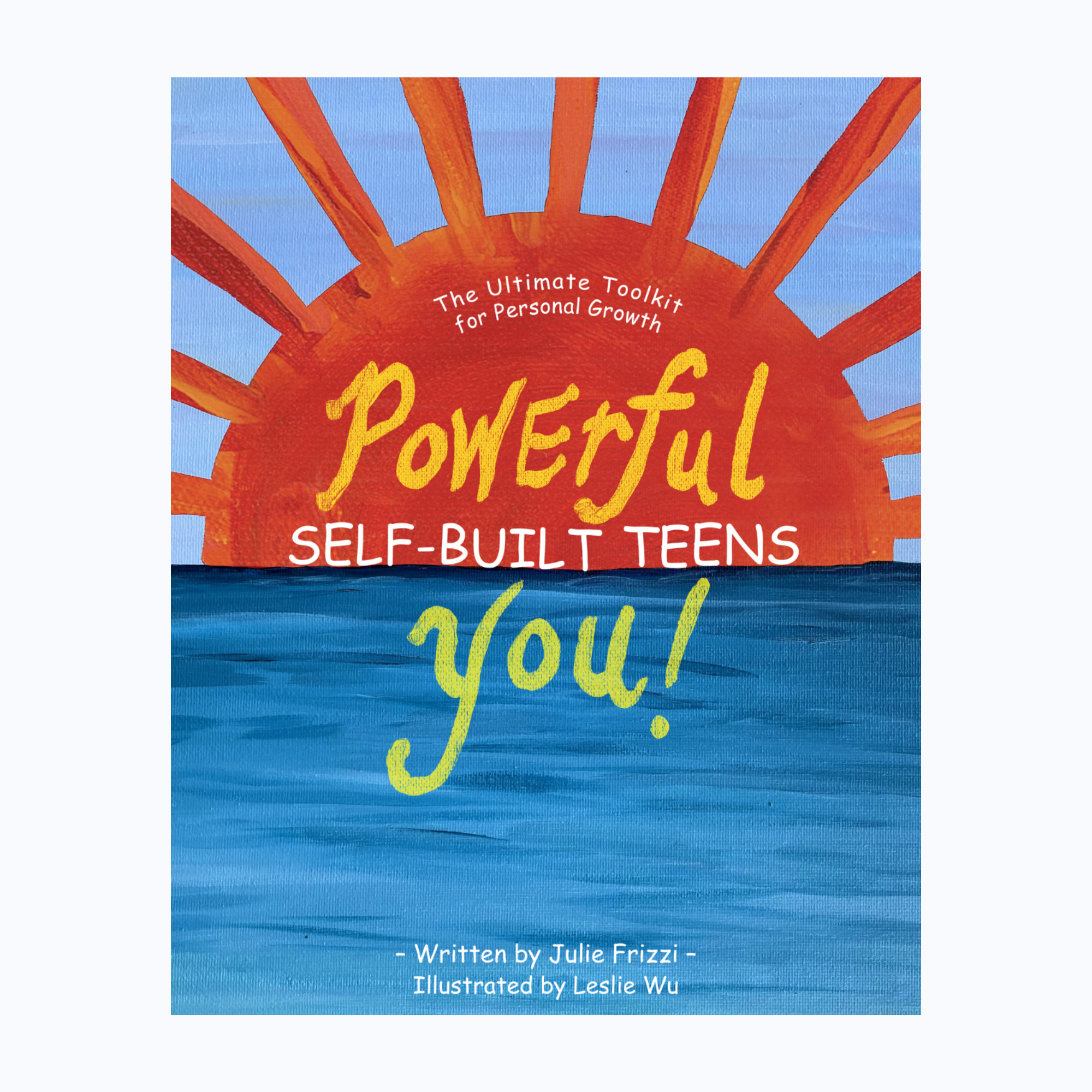
Help teens build confidence, connection, and essential life skills—one letter at a time!
Powerful You: Self-Built Teens is an engaging A–Z life skills workbook designed for parents, school counselors, educators, and anyone supporting teens.
Each lesson includes a short, relatable story and reflective turn-and-talk prompts that encourage meaningful conversations, self-awareness, positive choices, and stronger relationships.
What's Inside:
26 A–Z life skills lessons
Short stories that spark reflection and discussion
Turn-and-talk prompts that build connection
Mindful chair stretches to release tension and re-energize learning
Practical activities that encourage problem-solving and self-management
Inspired by Real Teens
As a district school counselor, Julie Frizzi listened to students share what would help them feel more connected at school. Their ideas included short movement breaks, time to reflect with classmates, and fun icebreaker activities.
Self-Built Teens brings those ideas together in an easy-to-use resource that helps teens discover their strengths, build relationships, and develop tools for everyday life.
Free Stretching Videos
Visit the Self-Built Teens section of the Powerful You website for free stretching videos that accompany each of the 26 lessons.
Want the Matching Life Skill Signs?
Explore the Self-Built Teens Bundle, which includes the printed book and a digital collection of all 26 matching life skill signs.
Format: Printed book
Powerful You — Breathe • Stretch • Life Skills