

Help teens discover time management strategies with this actionable lesson from the Self-Built Teens Workbook. Give your students the tools to succeed not only in school but for the rest of their life. Lesson B sets the stage for meaningful growth.
Positive Self-Talk
“I balance work and play.”
How to Use This Lesson
1. Meet the Powerful You Teen
Introduce Balancing Beck and the lesson theme, Balancing Work & Play. Talk about how schoolwork, responsibilities, friendships, and activities all compete for our time. Ask teens, “Do you ever feel like you have so much to do that there's no time to relax or have fun?”
2. Practice Positive Self-Talk
Introduce Beck's phrase: “I balance work and play.” Encourage teens to repeat it silently and notice how their thoughts influence their choices. Discuss how replacing pressure-filled thoughts such as “I must be the best at everything” with supportive self-talk can help them approach responsibilities with greater balance.
3. Breathe & Stretch
Use the FREE 5-minute classroom chair-stretch video below or lead the Balancing Tabletop Stretch from the Self-Built Teens book. Practice extending one leg and the opposite arm while using a sturdy chair for support. Encourage teens to take three deep breaths, notice their balance, and switch sides. Talk about how finding physical balance can remind us to create balance in our daily lives.
4. Read the Story & Reflect
Read Beck's story from the Self-Built Teens book. Discuss how Beck managed the pressure of studying for college entrance exams by planning his week and taking regular brain breaks. Use the reflection and journaling prompts to encourage discussion, partner sharing, or private writing. Ask, “Where in your life do you need to slow down? Where might you need to put in more effort?”
5. Connect with an Activity
If time permits, use Beck's Balancing Life Activity from the book. Fill a jar with large rocks, smaller pebbles, sand, and water to represent how we spend our time. Discuss how the large rocks represent top priorities, pebbles represent other important commitments, sand represents distractions, and water represents time for ourselves, family, and friends. Invite teens to identify their own priorities and consider what they might need to rearrange to create better balance.
6. Display the Skill Sign
Display Balancing Beck's Balancing Work & Play skill sign to reinforce the lesson. Review the five tips: Rest, Structure, Prioritize, Declutter, and Understand Yourself. Discuss how brain breaks, planning ahead, identifying important tasks, removing energy-draining distractions, and understanding personal needs can help create balance. Encourage teens to choose one strategy to practice during the week.
7. Practice at Home
Encourage teens to continue practicing balance outside the classroom. Share the FREE 20-minute home yoga video or the 5-minute parent chair-stretch video below. Invite teens and families to explore how breathing, movement, planning, and intentional breaks can support a healthy balance between responsibilities and recreation.
Chair Stretch Video
Parent Chair Stretch Video
20-Minute Home Yoga Video
Journaling Song
Don’t Have the Workbook Yet? Get the Self-Built Teens Workbook—Empower Teens Today
With Self-Built Teens Workbook, each lesson builds confidence, resilience, and emotional awareness. Lesson A is just the beginning of a journey toward empowerment and thriving.
Start Building Confidence Today : Explore the A-to-Z Guide Now
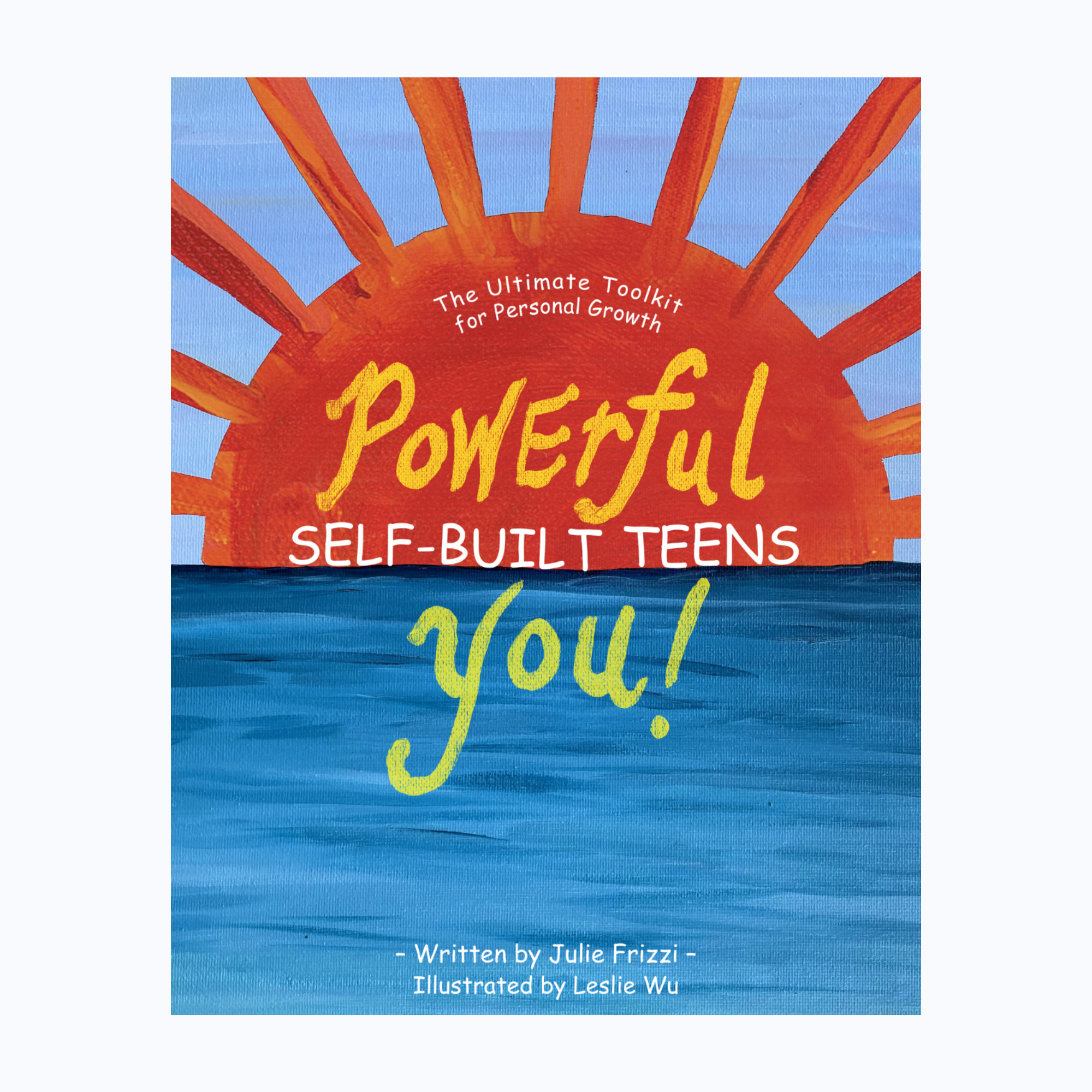
Help teens build confidence, connection, and essential life skills—one letter at a time!
Powerful You: Self-Built Teens is an engaging A–Z life skills workbook designed for parents, school counselors, educators, and anyone supporting teens.
Each lesson includes a short, relatable story and reflective turn-and-talk prompts that encourage meaningful conversations, self-awareness, positive choices, and stronger relationships.
What's Inside:
26 A–Z life skills lessons
Short stories that spark reflection and discussion
Turn-and-talk prompts that build connection
Mindful chair stretches to release tension and re-energize learning
Practical activities that encourage problem-solving and self-management
Inspired by Real Teens
As a district school counselor, Julie Frizzi listened to students share what would help them feel more connected at school. Their ideas included short movement breaks, time to reflect with classmates, and fun icebreaker activities.
Self-Built Teens brings those ideas together in an easy-to-use resource that helps teens discover their strengths, build relationships, and develop tools for everyday life.
Free Stretching Videos
Visit the Self-Built Teens section of the Powerful You website for free stretching videos that accompany each of the 26 lessons.
Want the Matching Life Skill Signs?
Explore the Self-Built Teens Bundle, which includes the printed book and a digital collection of all 26 matching life skill signs.
Format: Printed book
Powerful You — Breathe • Stretch • Life Skills