

Help teens recognize the power of quiet places with this actionable lesson from the Self-Built Teens Workbook. Whether it's conquering anxiety, fostering mindfulness, or building emotional resilience, Lesson A sets the stage for meaningful growth.
Positive Self-Talk
“I quiet the mind.”
How to Use This Lesson
1. Meet the Powerful You Teen
Introduce Quieting Quincy and the lesson theme, Quieting the Mind: Calm Your Mind, Clear Your Focus, Choose Peace. Discuss how constant notifications, busy schedules, worries, and social media can make it difficult to find moments of peace. Ask teens, “Does your mind ever feel so busy that it's hard to focus or relax?” Explain that quieting the mind doesn't mean stopping every thought. It means creating space to notice our thoughts, reduce distractions, and reconnect with ourselves.
2. Practice Positive Self-Talk
Introduce Quincy's phrase: “I quiet the mind.” Encourage teens to repeat it silently while taking a slow, comfortable breath.
Discuss how thoughts such as “I must respond to EVERYONE” can create pressure and make it difficult to relax. Practice replacing that thought with supportive reminders such as “I can take a break” or “I don't have to respond immediately.”
Invite teens to notice the difference between feeling obligated to be constantly available and giving themselves permission to enjoy quiet moments.
3. Breathe & Stretch
Use the FREE 5-minute classroom chair-stretch video below or lead the Sun Arm Stretch from the Self-Built Teens book.
Begin seated comfortably with your arms at your sides and palms facing forward. Spread your fingers wide, noticing the spaces between them. Slowly open and close your fingers three times.
Inhale and stretch both arms overhead like rays of sunshine. Exhale and gently lower your arms back to your sides. Repeat for five slow breaths.
Encourage teens to notice the brief moments of stillness at the top and bottom of each breath. Remind them that even a short pause can help them reconnect with the present moment.
4. Read the Story & Reflect
Read Quincy's story from the Self-Built Teens book. Discuss how Quincy believed staying online helped her remain connected with friends, but sometimes she felt overwhelmed by the pressure to respond to everyone.
Explore how Quincy began setting aside quiet time without her phone, writing tasks in a small notebook, and spending time beneath a tree. These moments of solitude helped her reconnect with herself and return to others with greater attention, creativity, and clarity.
Use the book's reflection and journaling prompts for group discussion, partner sharing, or private writing. Ask, “What screen-time rules have you made for yourself?” and “What activities do you enjoy doing alone?” Invite teens to identify an area of their lives that could benefit from more peace.
5. Connect with an Activity
If time permits, lead the book's Exchange with Trees activity to help teens experience quiet through a connection with nature.
Invite teens to sit or stand comfortably outdoors near a tree, or imagine a favorite peaceful place in nature if going outside isn't possible.
Guide them through the activity:
Be Still: Quietly observe the tree and the natural world around you.
Breathe In: Imagine breathing in the oxygen released by the tree.
Breathe Out: Remember that the carbon dioxide we exhale can be used by plants.
Notice: Observe the sounds, sensations, and feelings that arise during a few moments of stillness.
Discuss how spending time in nature can provide a break from screens, responsibilities, and men
Guide them through the activity:
Be Still: Quietly observe the tree and the natural world around you.
Breathe In: Imagine breathing in the oxygen released by the tree.
Breathe Out: Remember that the carbon dioxide we exhale can be used by plants.
Notice: Observe the sounds, sensations, and feelings that arise during a few moments of stillness.
Discuss how spending time in nature can provide a break from screens, responsibilities, and mental clutter. Ask, “How did you feel before and after this quiet moment?”
6. Display the Skill Sign
Display Quieting the Mind: Calm Your Mind, Clear Your Focus, Choose Peace, featuring Quieting Quincy.
Explore the sign's five reminders: Turn Down the Noise, Clear Your Mind Clutter, Focus on What Matters, Breathe—Pause—Reset, and Choose Peace Every Day.
Review the practical suggestions for clearing mental clutter, including creating a daily to-do list, writing worries on paper, silencing notifications, setting screen-time limits, planning tech-free outdoor time, keeping an updated calendar, and resolving friendship problems.
Invite teens to choose one small change they could make to create more peace in their daily lives. Reinforce the message:
“You are in charge of your mind. Protect your peace.”
7. Practice at Home
Encourage teens to create a short daily quiet-time routine. They might put away their phones for a few minutes, sit outdoors, write down their worries, or practice slow breathing before bed.
Share the FREE 20-minute home yoga video or the 5-minute parent chair-stretch video below. Invite teens and families to explore how mindful movement, breathing, and screen-free moments can help create greater calm, clarity, and connection.
Chair Stretch Video
Parent Chair Stretch Video
20-Minute Home Yoga Video
Journaling Song
Don’t Have the Workbook Yet? Get the Self-Built Teens Workbook—Empower Teens Today
With Self-Built Teens Workbook, each lesson builds confidence, resilience, and emotional awareness. Lesson A is just the beginning of a journey toward empowerment and thriving.
Start Building Confidence Today : Explore the A-to-Z Guide Now
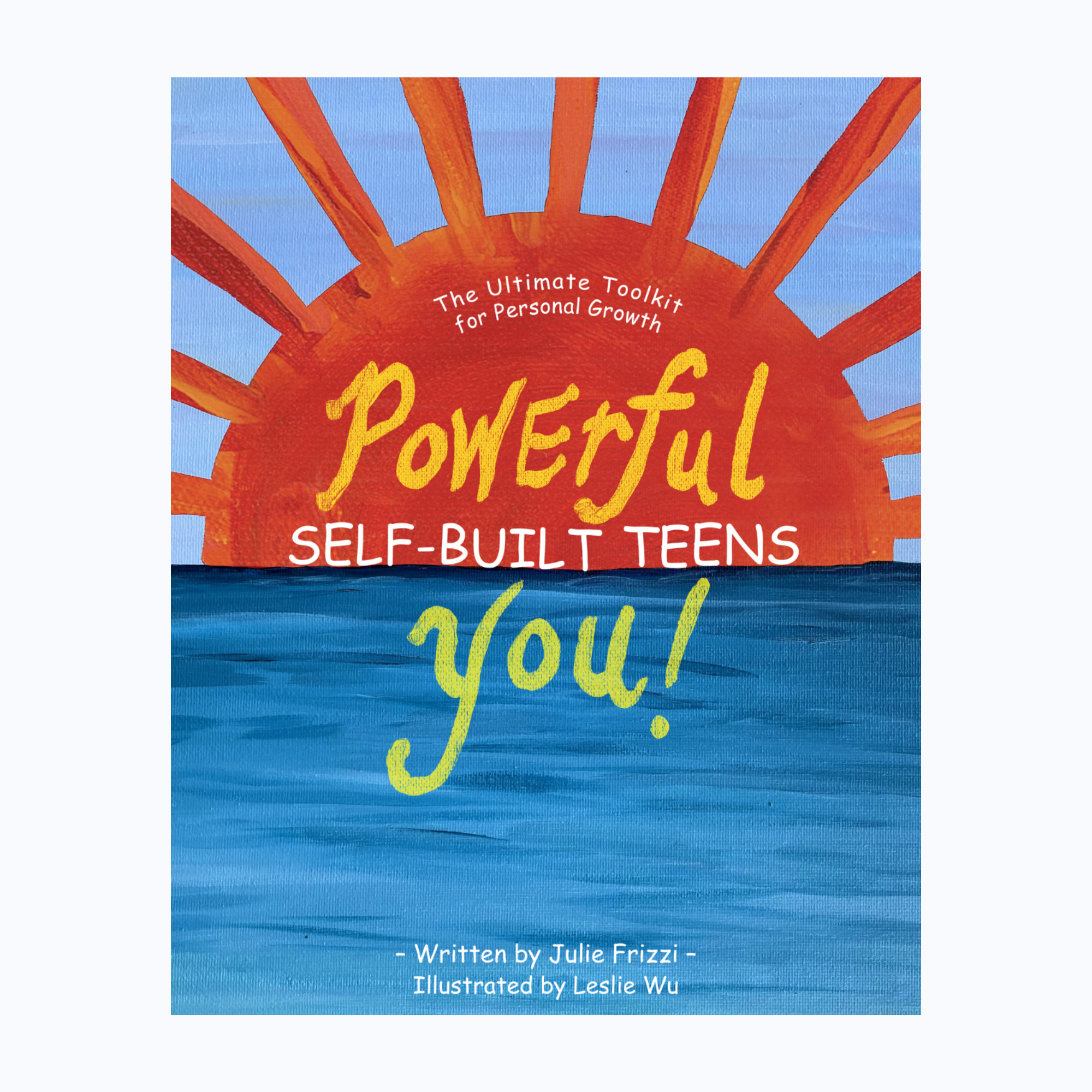
Help teens build confidence, connection, and essential life skills—one letter at a time!
Powerful You: Self-Built Teens is an engaging A–Z life skills workbook designed for parents, school counselors, educators, and anyone supporting teens.
Each lesson includes a short, relatable story and reflective turn-and-talk prompts that encourage meaningful conversations, self-awareness, positive choices, and stronger relationships.
What's Inside:
26 A–Z life skills lessons
Short stories that spark reflection and discussion
Turn-and-talk prompts that build connection
Mindful chair stretches to release tension and re-energize learning
Practical activities that encourage problem-solving and self-management
Inspired by Real Teens
As a district school counselor, Julie Frizzi listened to students share what would help them feel more connected at school. Their ideas included short movement breaks, time to reflect with classmates, and fun icebreaker activities.
Self-Built Teens brings those ideas together in an easy-to-use resource that helps teens discover their strengths, build relationships, and develop tools for everyday life.
Free Stretching Videos
Visit the Self-Built Teens section of the Powerful You website for free stretching videos that accompany each of the 26 lessons.
Want the Matching Life Skill Signs?
Explore the Self-Built Teens Bundle, which includes the printed book and a digital collection of all 26 matching life skill signs.
Format: Printed book
Powerful You — Breathe • Stretch • Life Skills