
Staying Through Struggles | 30-Min YIN Yoga
Hi Educators,
This week’s 30-Minute Yin practice is centered around one powerful word: Stay.
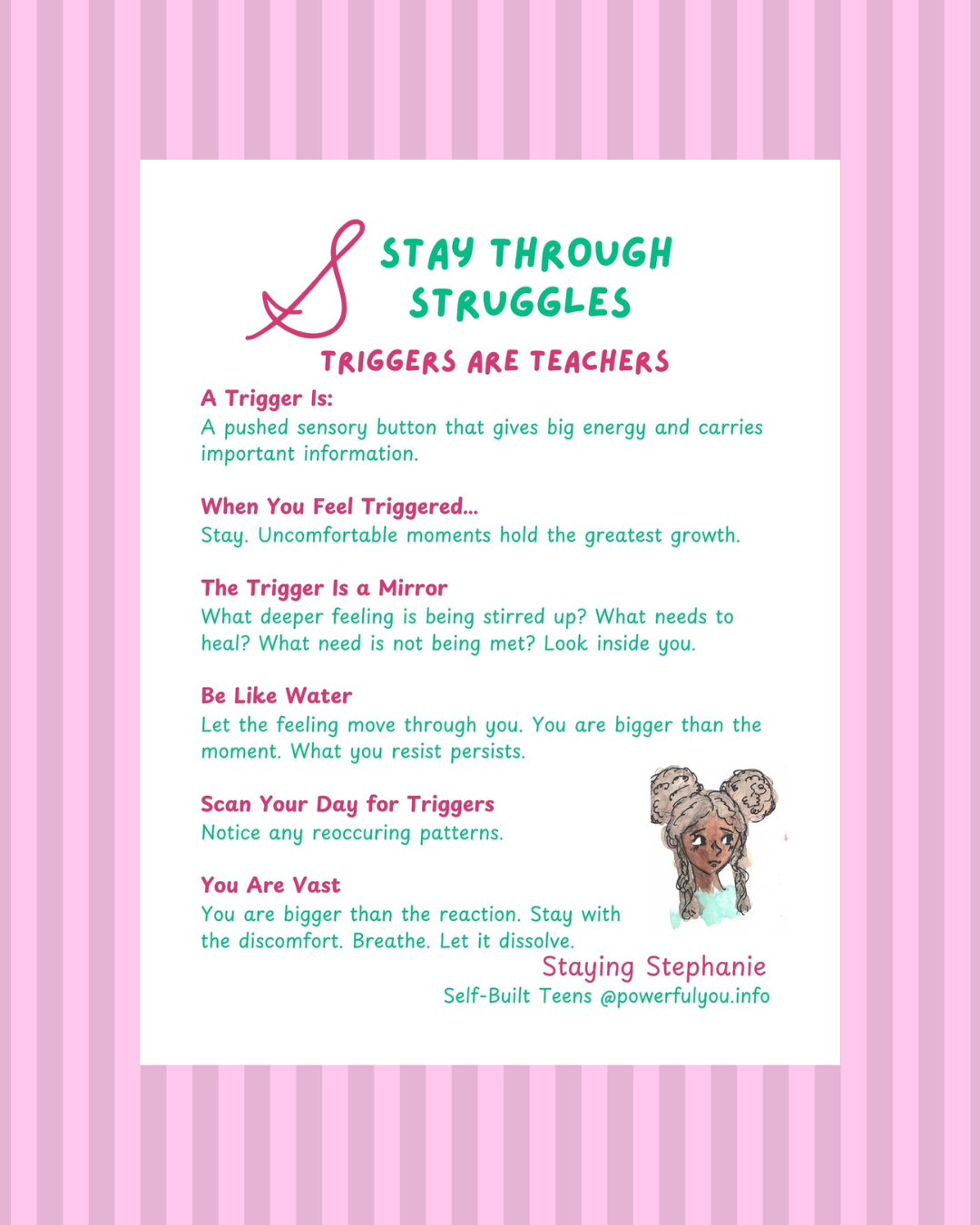
Teaching children is full of moments that stir something deep inside us. A comment from a student, an unexpected behavior, a difficult conversation, an overwhelming workload — these can all act as triggers, which are simply pushed sensory buttons that carry big energy and important information.
Instead of rushing past discomfort or pushing feelings away, this practice invites you to stay long enough to learn from what arises.
First: Notice the Trigger
Inquiry begins with awareness. When something activates you, pause and ask:
What am I feeling right now?
Where do I notice this in my body?
Is my breath shallow or tight?
What emotion is underneath the reaction?
Your body often notices before your mind understands.
The Trigger Is a Mirror
Triggers are not signs of failure — they are invitations. They may point toward:
A deeper feeling asking for attention
A need that is not being met
A place that still needs care or healing
Staying doesn’t mean approving of what happened. It means choosing curiosity over immediate reaction.
Be Like Water
During Yin, sensations rise and fall just like emotions. When we breathe and stay present, feelings move through rather than getting stuck. What we resist tends to persist — but what we allow can soften.
Growth rarely happens in comfort. The uncomfortable holds information. When you stay:
You build emotional regulation
You respond instead of react
You model resilience for students
You deepen self-trust
You are bigger than any single moment.
Using This Skill With Students
These same skills can be gently taught to children. In Lesson S from the book Self-Built Teens, students learn that triggers are teachers and that staying with uncomfortable feelings helps them grow stronger inside. With younger students, you can introduce this idea through simple language and stories like Powerful You PRIMARY (K-1) Story W — Waiting — where children practice pausing, noticing their feelings, and waiting instead of reacting right away. Pausing Pablo Lesson P from Powerful You introduces the word PAUSING. When educators model noticing body sensations, breathing, and asking curious questions, students begin to see that emotions aren’t emergencies — they are messages.
A Gentle Practice This Week
As you move through Yin poses, notice when discomfort appears — physically or emotionally. Instead of escaping immediately, soften your breath and observe with kindness. Ask, What is this here to teach me?
Even a few seconds of staying can change how you meet the next challenge in your classroom and in your life.
You are vast.
You are capable.
You can stay — and still be gentle with yourself.
With calm and care,
Julie
Powerful You
Join a class anytime: https://powerfulyou.as.me/