
Shining a Light on Unworthiness: Lesson X from Self-Built Teens
As educators, we pour so much of ourselves into our students. We plan, support, encourage, and show up every day hoping to make a difference. Yet many of us quietly carry a heavy thought: I’m not good enough.
Maybe we compare our classroom management to others.
Maybe we worry about test scores.
Maybe we hesitate to try something new because we believe someone else could do it better.
These thoughts can make us feel unworthy — and when we feel unworthy, we hold back our gifts.
Lesson X from Self-Built Teens reminds us that unworthiness isn’t truth — it’s just a thought. And the good news? We can change it.
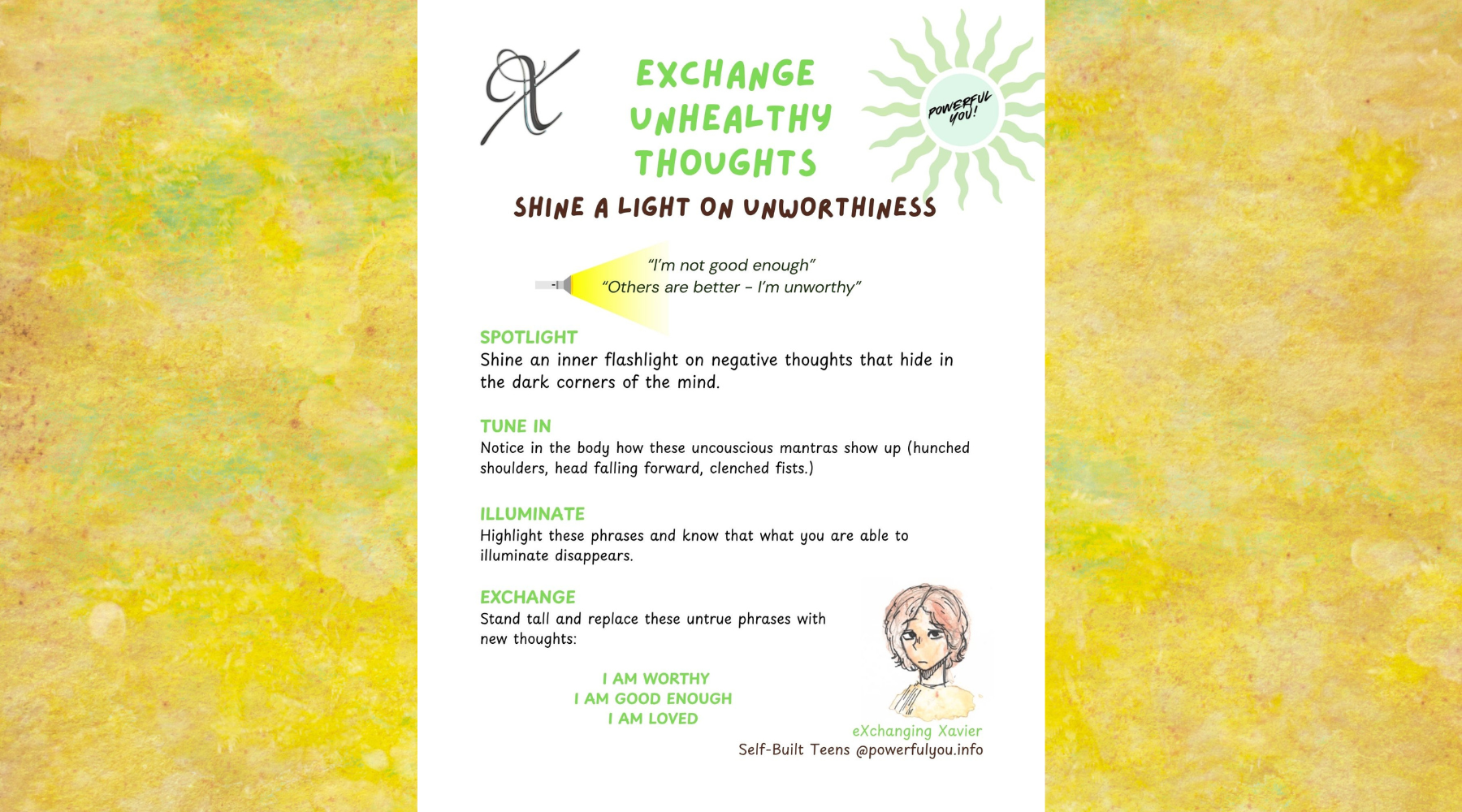
The sign that accompanies this lesson outlines four simple steps to Shine a Light on Unworthiness.
1. Spotlight
Shine an inner flashlight on the negative thoughts that hide in the dark corners of the mind.
Often these thoughts sound like:
“I’m not good enough.”
“Others are better than me.”
“I don’t have what it takes.”
Bringing awareness to these thoughts is the first step toward changing them.
2. Tune In
Next, tune into your body. Notice how these unconscious mantras show up physically.
Do your shoulders hunch?
Does your head drop forward?
Do you clench your fists or tighten your jaw?
Our bodies often reveal what our minds are repeating. Awareness helps us interrupt the pattern.
3. Illuminate
Highlight these phrases. Write them down. Say them out loud.
What you illuminate begins to lose its power. When we bring negative thoughts into the light, they no longer control us.
4. Exchange
Finally, exchange those untrue phrases with new thoughts. Stand tall. Shift your posture. Replace the old messages with affirmations such as:
I am worthy.
I am good enough.
I am loved.
These new thoughts create new energy — and new confidence.
This simple four-step process not only supports our own well-being, but also models powerful social-emotional learning for our students. When we practice shedding unworthiness, we show students that growth, courage, and self-belief are skills that can be learned.
To help you experience this process, I’ve also included a 30-minute video where you can practice releasing unworthiness and stepping into your worth. Give yourself this time — you deserve it.
When educators believe in their own worth, classrooms become places of confidence, compassion, and courage. And that’s where real transformation begins.
You are worthy.
You are good enough.
You are making a difference — even on the days it doesn’t feel like it.